
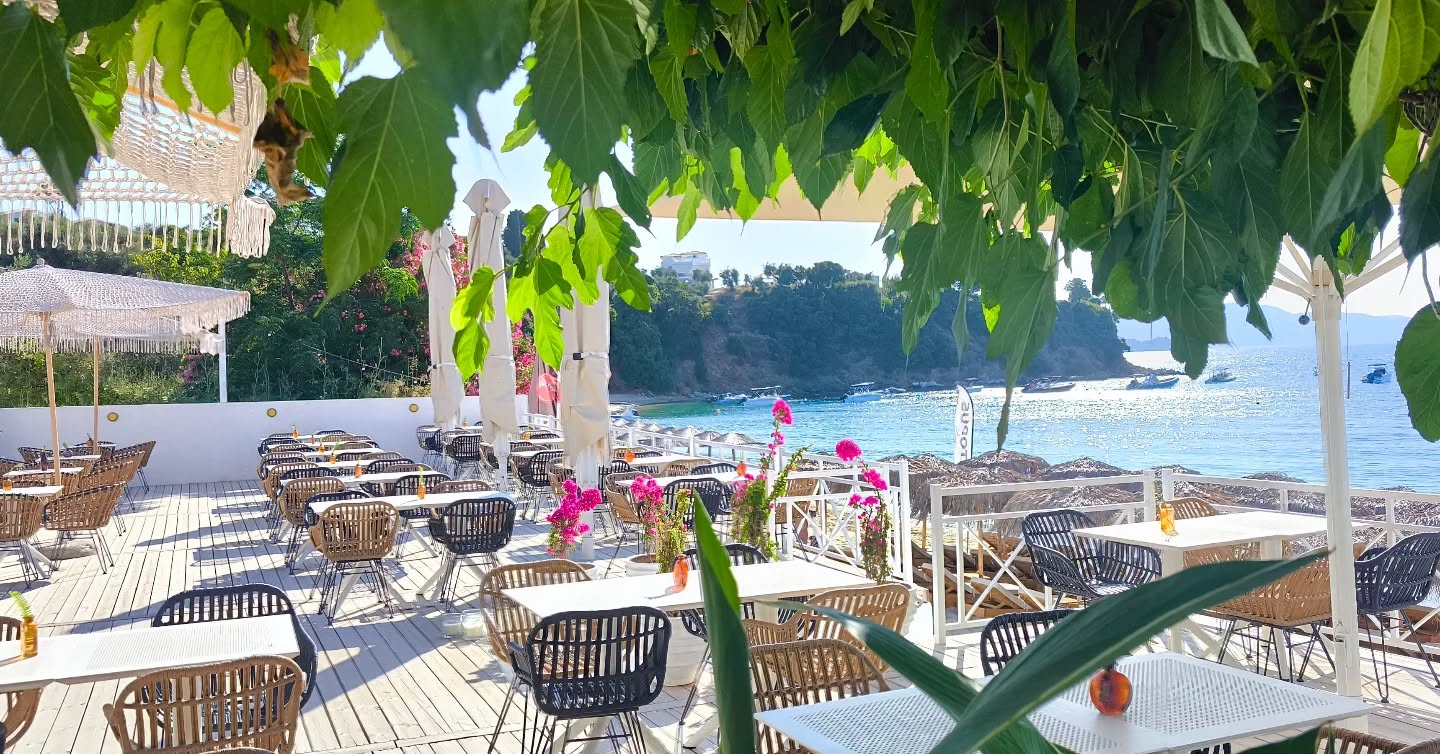

In the peaceful bay of Achladies on the Greek island of Skiathos, turquoise waters of the Aegean Sea gently met the silver sands. Ancient olive trees and tangled wild vines surrounded the area. In this serene coastal spot stood a modest summer house, the very first residence ever built there. The house was constructed in the 1940s by Thomas Karvounis, together with a handful of his closest friends. They built it using weathered stones taken from old ruins scattered across the land. These ruins were the remains of a forgotten monks’ workshop that once belonged to the now-vanished Asomatos Monastery.
Centuries earlier, during the 1600s, the monks of Asomatos devoted their lives to cultivating vast vineyards. These vineyards once covered the entire bay of Achladies. The monks pressed grapes into large quantities of wine, which sustained their spiritual community. Today, the monastery itself no longer exists. In its place stands a small church named Taksiarchis, built directly on the original foundations. Its stone walls and modest bell tower serve as a quiet reminder of the site’s sacred past.
Even when Thomas began working on the summer house, the land still carried traces of that winemaking heritage. A few resilient vines continued to cling to the soil. Their tendrils twisted through the underbrush like living memories of another era. According to a cherished local legend, the monks’ wine production had once been so abundant that it overflowed. This abundance reportedly led to creative uses beyond simple consumption. Inspired by this story, Thomas and his friends decided to mix some surplus wine from the remaining vines into the clay mortar. They used it instead of plain water while binding the ancient stones together.
Whether this unusual mixture added strength to the structure remains uncertain. Still, the story endured through generations. It became a symbol of the deep connection between the land, its history, and the people who lived upon it. Thomas inherited this treasured plot of land from his father, Alexander Karvounis. The family name itself reflects a lineage deeply rooted in the soil of Skiathos. At this point, the voice of Ioannis Fragkoulas enters the narrative. Fragkoulas was the island’s eminent historian and a devoted chronicler of local folklore, genealogy, and tradition.
Throughout his life, Fragkoulas recorded the histories of Skiathos families with great care. He documented their names, origins, and stories as they were remembered by locals. His work became an essential record of the island’s collective memory. Among his many observations, Fragkoulas notes that the surname Karvounis is traditionally believed to derive from the Italian name “Carboni.” This Latin form entered local use during the Venetian period, referred to as “στα χρόνια των Φράγκων.” His notes consistently reflect how islanders themselves understood these linguistic roots.
Fragkoulas often added brief but meaningful remarks to family lineages. These comments blended linguistic insight with oral tradition. Through this method, he preserved names, customs, and identities that survived centuries of occupation, trade, and cultural exchange. Venice exercised considerable influence over Greek territories, especially islands such as Skiathos. This influence began after the Fourth Crusade in 1204 and continued for centuries. Trade, intermarriage, and administrative systems gradually shaped local naming practices.
Fixed hereditary surnames, which were common among Venetian nobility, spread to Byzantine and Greek elites. Over time, these naming conventions blended with existing local traditions. The surname Karvounis, found mainly in Attica and the Greek islands, reflects this cultural fusion. For the Karvounis family, the name stands as a marker of resilience and continuity. It reflects centuries of adaptation shaped by external rule and local identity. The name carries echoes of Venetian presence while remaining firmly rooted in Greek heritage.
The Venetian Republic exerted influence over many Greek islands from the 12th to the 17th century. This control expanded significantly after 1204, when Venice gained territories including Crete, the Cyclades, the Ionian Islands, and parts of the Aegean. Even areas of the Peloponnese briefly fell under Venetian rule. This era, often known as the Venetokratia, reshaped island economies and trade networks. Agriculture changed during this time, with wine becoming a central commodity. These historical forces left lasting marks on land, architecture, and family names, traces that remain visible in places like Achladies today.
The Karvounis Ancestry

Venetian merchants, drawing on their maritime dominance, elevated Greek wine production from local sustenance to international export. They introduced advanced viticultural techniques, expanded vineyards, and established trade routes that connected the islands to European markets. Wine became more than a simple product. It stood as a symbol of cultural exchange, blending Greek tradition with Venetian commercial expertise. While many ancestors of the Karvounis family pursued seafaring lives as captains, navigating rough waters around Greece and beyond, Thomas chose a different path. He lived quietly on the island and worked part-time as a skilled carpenter. With steady hands, he shaped wood and tended his family land with equal care.
Thomas felt a deep bond with the earth. He cultivated small plots that produced rich olive oil from gnarled trees and modest quantities of wine from heirloom vines. This simple way of life brought him deep satisfaction, far removed from the demands and dangers of the open sea. From the warm bloom of May until the cooler days of early October, Thomas lived with his family in the small two-story summer house. They followed the gentle rhythms of seasonal island life. The upper floor served as their living quarters, filled with laughter and the familiar aromas of home-cooked meals drifting through open windows.
The shaded ground floor housed their animals. There was a sturdy donkey named Burrico, a name inspired by the Spanish word “burro,” which Thomas had learned from stories shared by visiting sailors. Two goats lived there as well. One was the pale-coated Asproula, meaning “the white one,” and the other was the russet-colored Kokkinoula, meaning “the red one.” A flock of chickens roamed nearby, pecking for scraps. Burrico carried supplies from Skiathos town and transported the family along winding paths and rugged trails. Each morning, the goats provided fresh milk, which the family turned into cheese. Together, these routines supported a self-sufficient life rooted in land, tradition, and quiet continuity.
The household also kept two loyal Kokonaki dogs, a small, wiry breed with roots tracing back to ancient Greece. Laika, named after the pioneering Soviet space dog, and Remi, a French-inspired name chosen for its artistic flair, formed a vigilant pair. Together, they guarded the goats and alerted the family whenever visitors approached. Daily life centered on the gifts of sea and land. Meals were prepared in a small, handmade stone oven, its hearth alive with fires fueled by gathered wood. Fish appeared often on the table, grilled fresh from the sea, alongside generous portions of octopus caught in the bay’s thriving underwater grounds. This abundance earned the beach its affectionate nickname, Xtapodia, meaning Octopus Place.
For fishing trips and gentle journeys around the bay, the Karvounis family relied on a small boat named Pou Se Vrika, translated as Where Did I Find You. Thomas himself decorated the boat with painted mermaids. Fitted with a sail and sturdy oars, it served both as transport and as a vessel for adventure. Alongside his daily work, Thomas followed his passion for art. He painted in oils on canvas or reclaimed wood, capturing the movement of waves, the twisting forms of vines, and the quiet beauty of the surrounding landscape.
Thomas’s two sons grew up within this close-knit world. The elder, Alexander, would later carry forward the family legacy. The younger shared in daily chores and absorbed the rhythms of island life under his father’s guidance. Just steps from the house, directly beside the sea where the family often shared meals outdoors, a new chapter slowly began. In 1952, following the end of World War II, the British Navy docked in Skiathos. The Karvounis family offered warm hospitality, serving hearty food to the sailors.
Soon after, visitors from mainland Greece began arriving, drawn by the unspoiled beauty of Achladies. Local stories speak of notable guests anchoring in the bay aboard elegant yachts. Among them were Winston Churchill, said to have enjoyed fresh octopus and local wine as a guest of Aristotle Onassis, Greta Garbo seeking quiet retreat by the Aegean, and King Paul of Greece sampling traditional dishes. Whether fully documented or shaped by years of storytelling, these accounts helped spread the reputation of Achladies far beyond the island.
By the 1970s, Thomas’s son Alexander transformed the informal gatherings into a proper establishment. Achladies Taverna became one of the first restaurants operating outside Skiathos town. It quickly grew beloved by both locals and visitors. The taverna served traditional Greek dishes, freshly caught fish, and island staples paired with wines that honored the bay’s long vinicultural history.
Among these wines were the deep and robust Mavroudi, the hearty Brousko, and the resin-infused Retsina, each echoing techniques rooted in monastic tradition. Guests also enjoyed Greek brandy such as Metaxa, the international aperitif Campari, and well-known Greek wines including Boutari, Santa Elena, Robola, and Demesticha. As laughter and the sound of clinking glasses filled the air, the humble summer house stood nearby. Built from monastic ruins and wine-mixed clay, it remained a living symbol of resilience, hospitality, and the enduring spirit of Skiathos.
Today, Octopus Beach Bar & Restaurant is run by the Karvounis brothers, Nick, Thomas, and Ermis. They proudly continue the family legacy while adding their own character, always guided by respect for the past. Their focus remains on offering a memorable dining experience through carefully prepared food, refreshing drinks, and genuine hospitality.
Whether guests are seeking a romantic dinner for two, a lively evening with friends, or a relaxed family meal, Octopus Beach Bar & Restaurant welcomes everyone. Visitors are invited to experience the atmosphere, history, and character that have made this beachside restaurant so well regarded.
Today, that very house still stands proudly on the site of what has become the modern Octopus Beach Bar restaurant, a bridge between centuries-old history and the vibrant life of contemporary Achladies. Its stones, once bound with the monks’ wine, continue to witness the island’s story, linking the past to the present through the enduring legacy of the Karvounis family.